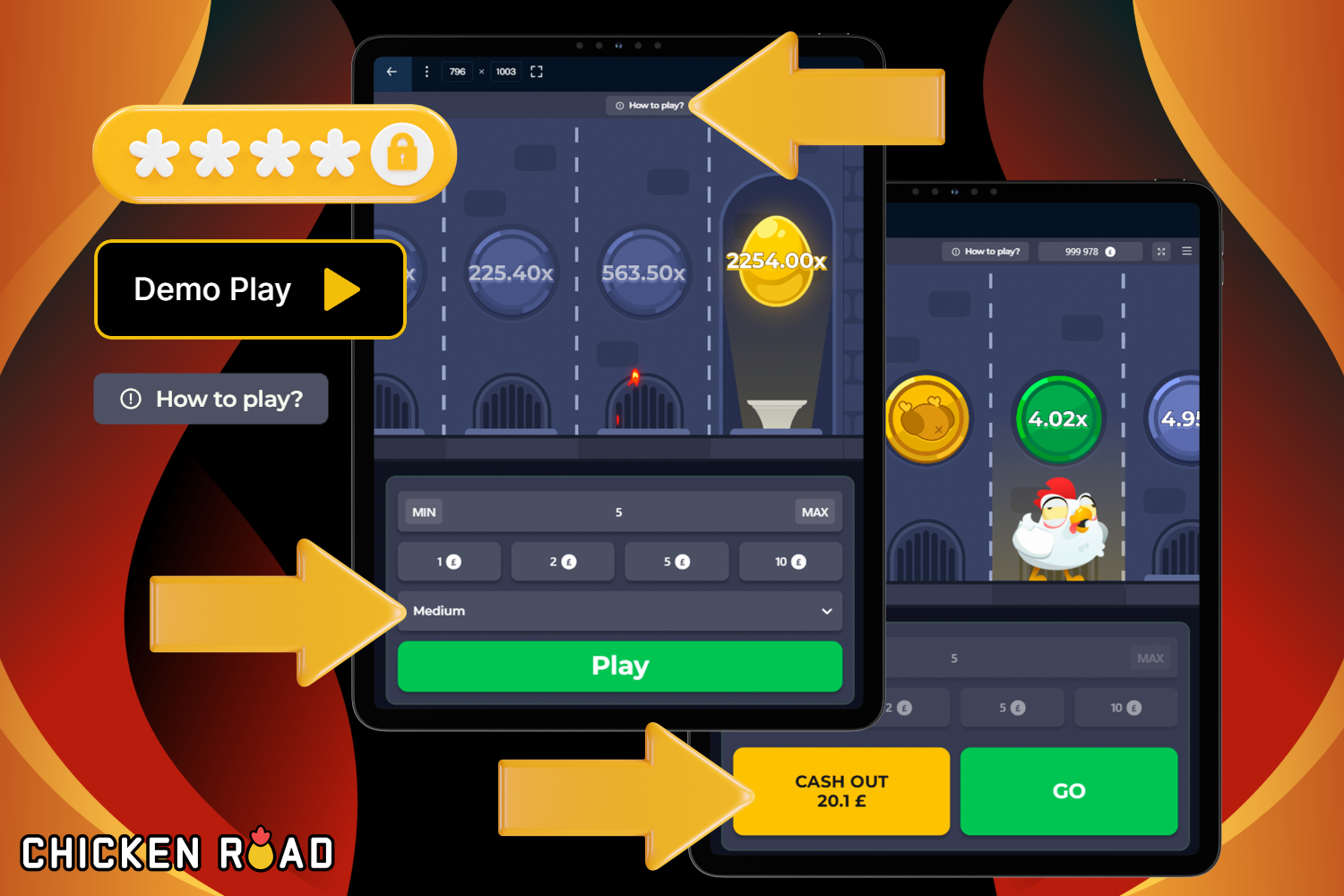
Chicken Road is a individual casino game that blends a simple grid layout with a unique gamble option, allowing players to decide whether to secure a payout or chance it for a greater reward https://benshulihulichicken.com/. The title stands out because its core loop is not limited to spinning reels; it also contains a distinct risk step that can be activated after any winning combination. This article analyzes the mechanics that underpin the gamble feature, the mathematics that control its value, and the useful steps a player can implement to determine when to take or decline the offered multiplier. By concentrating on checkable parameters such as RTP, volatility, and bet range, the discussion provides a framework for assessing whether the gamble option enhances or reduces long-term return.
Key Extra Functions: Wild Symbols, Scatter Icons and Complimentary Rounds
A set of special symbols change the basic game. The wild symbol substitutes for any regular pay symbol except the scatter and shows up on game reels two, three and four exclusively. When two wilds appear on the same winning line they multiply the line win before the gamble prompt emerges. The scatter, represented by a gold egg, triggers eight bonus rounds when three or more show up any place on the grid. Throughout complimentary games an additional multiplier trail begins at 1x and rises by 1x after each and every complimentary round win, resetting solely when the bonus ends. A additional reactivation symbol combination awards four extra bonus spins with no resetting the multiplier trail. Because free spins are conducted at the identical bet as the initiating spin, the feature provides a straightforward increase in expected value that is independent of the double-or-nothing decision made after each payline success.
Understanding the Game Grid and Winning Lines
Chicken Road employs a five-reel, three-row layout with a predetermined set of twenty-five paylines that extend left to right. our take Each line evaluates symbols only on adjacent reels, and a win is counted when three or more identical symbols stop on any active line. The paytable displays low-value symbols as styled card ranks from nine through ace, while premium symbols show farmyard chickens in various poses. Because the paylines are fixed, the player is unable to decrease or raise the number of active lines; every spin therefore checks the same twenty-five routes. This structure maintains the evaluation transparent: after the reels stop, the game right away highlights every winning line and shows the corresponding credit amount before offering the gamble prompt. Players who prefer to study line geometry can halt the autoplay function and check each highlighted path, verifying that only consecutive left-to-right matches count to the total.
How the Gamble Feature Works Step by Step
Subsequent to any credit prize from a line win or free-spin payout, the game shows a prompt giving the choice to accept or gamble. Choosing gamble triggers a mini-game in which five closed cards appear face down; one card is an ace while the remaining four are lower ranks. The player has to choose a single card. If the ace is shown the payout multiplies by two and the option to gamble again is given. A wrong choice surrenders the entire amount and returns the player to the reels. The probability of success on any single gamble is exactly twenty percent, yet the game shows an on-screen counter that tracks consecutive successful gambles within the same round. Because the counter resets after a loss or after the player collects, the statistical expectation of repeated gambles is calculable in advance: the break-even point takes place after three consecutive wins, at which stage the probability-weighted return equals the original payout.
Strategic Framework for the Gamble Option
Participants can approach the gamble choice as an independent betting prospect whose expectation is negative. The mathematical expectation of one gamble round is 0.2 × 2 + 0.8 × 0 = 0.4, meaning forty percent of the risked amount is returned on average. This figure remains constant regardless of stake size or previous outcomes. Thus, the logical approach for a gambler aiming for long-term profit is to refuse the bet each time. However, some participants accept the gamble when the current payout is small relative to their session bankroll, because the absolute loss is limited and the entertainment value of the risk step may outweigh the negative expectation. A useful guideline is to establish a personal limit—such as taking the gamble only when the proposed sum is under two percent of the present balance—and to log each choice in a session record, enabling real results to be contrasted with the theoretical expectation.
Return to Player along with Volatility and Theoretical Return
The reported return-to-player rate for Chicken Road stands at 96.2 percent when the gamble feature is never activated. This proportion indicates the long-run average across millions of spins and assumes optimal use of all base-game features. Volatility is classified as medium-high, indicating win frequency sits between one hit in three spins and one hit in four spins, yet the spread of payout sizes is weighted toward occasional larger line wins. When the gamble option is activated, the effective RTP can shift because the risk step has a house edge that is independent of the base game. Operators therefore display two separate RTP values: one for standard play and another that accounts for average gamble behaviour. Players who wish to accept the gamble regularly should compare both figures on the information screen before committing larger stakes.
Bet Range, Coin Denominations and Maximum Exposure
Bet options starts at at least £0.25 per game round and increases through twenty-five levels to up to £25.00. Every level multiplies the active coin size, which spans from £0.01 to £1.00, across the set twenty-five paylines. The maximum theoretical exposure in one spin is thus £25.00, and the top advertised line prize is 500 multiplied by the stake. As the gamble feature can increase this sum by up to five, the maximum credit prize in any one round hits 2,500 multiplied by the stake. Providers must still apply local betting restrictions; in the United Kingdom the highest bet per round for any slot machine is set at £2.00 for players under twenty-five and £5.00 for players aged twenty-five and over. Chicken Road modifies its maximum threshold to remain compliant with these legal restrictions.
Gaming Session Oversight and Responsible Play Controls
Chicken Road includes the complete range of responsible play features mandated by the United Kingdom Gambling Commission. Deposit, loss and single-spin limits are adjustable from the account menu and cannot be changed until the specified timeframe expires. Reality-check reminders appear every thirty minutes by default and can be adjusted down to five-minute intervals. When a limit is triggered the game blocks further play and directs the player to the account summary page. Session history lists every spin result, including whether the gamble option was accepted and the conclusion of each card draw. Reviewing this data after a session allows a player to verify that the recorded hit frequency matches the declared 96.2 percent RTP and to adjust future stake or gamble behaviour accordingly. Because the game stores only the last hundred rounds, regular export of the CSV report is suggested for long-term tracking.

Chicken Road’s gamble feature therefore serves as an extra side gamble whose theoretical value is lower than the base game. Players who value mathematical return will consistently collect after en.as.com each win, while those who enjoy the risk step can establish strict boundaries and session limits to hold exposure within predetermined boundaries. Checking the in-game information screen for the most recent RTP values and verifying that stake limits comply with UK rules remains the most reliable way to ensure that any adopted plan stays consistent with both personal goals and regulatory requirements.