

Every spin on a slot machine, if you are playing a classic three‑reel game or a feature‑rich video slot like House of Fun secure sign in, begins with a single invisible process: the random number generator. For Australian players who enjoy pokies online, understanding how the RNG works removes the mystery and replaces it with genuine confidence. The RNG is not a vague concept but a precise, testable piece of software that decides where the reels stop, when a bonus fires, and the sum a winning combination pays. In this article we reveal the inner workings on the RNG that powers House of Fun, a spooky haunted‑mansion slot well-liked among Aussie players for its atmospheric theme and layered bonus features. We will explore how the generator produces outcomes, how it influences everything from paylines to jackpots, and what independent testing means for fairness. By the end, you will know exactly what happens behind the screen each time you press spin.
RTP and the Long-Term Mechanics of the RNG
RTP, or RTP, is the share of total wagers that a slot is programmed to pay back over an exceptionally large number of spins. The RNG is the engine that produces this percentage. It does not ensure that you will get back 96% of your session bankroll; that figure only materializes after millions of rounds. House of Fun usually carries an RTP in the vicinity of 96%, a common level for modern video slots, but we always advise checking the game’s information page for the exact value. The RNG attains the target RTP by setting the correct probabilities to every winning combination and bonus trigger. If a game is crafted to return 96%, the sum of all possible payouts multiplied by their probabilities amounts to 96% of the total bet amount over the long run.
What RTP Actually Means
It is essential to understand that RTP is not a per‑session guarantee but a statistical average. The RNG inside House of Fun produces a path of outcomes that, when combined across all players and all spins, settles on the advertised figure. In a single evening, you might see a return of 40% or 200%, simply because the short‑term variance is large. The RNG does not adjust itself to meet a quota; it just keeps creating numbers according to the fixed probability table. Australian players who view RTP as a guide rather than a guarantee will have a more realistic and pleasurable experience. The number is valuable for comparing games, but it tells you zero about what will happen in the next hundred spins.
RTP in House of Fun
While we cannot release an exact RTP figure without consulting the official game documentation, House of Fun sits within the typical range for high‑quality video slots. The game’s maths model includes a base game return and a contribution from the free spins feature, where much of the value is centered. The RNG secures that the free spins trigger with a frequency that maintains the overall RTP. If you want the precise percentage, open the paytable or the help screen inside the game itself; that is where the developer states the theoretical return. This transparency is part of what renders a slot trustworthy, and we motivate every player to look for it before committing real money.
Set vs. Growing Jackpots and the RNG’s Role
House of Fun is primarily a static‑jackpot slot, meaning its top payout is a predefined multiple of the bet rather than a increasing prize pool. In a set‑jackpot game, the RNG decides whether the jackpot combination lands in just the same way it decides any other win. The probability of achieving the top prize is defined by the symbol weighting, and the payout is awarded directly from the game’s theoretical return. Progressive jackpots work differently: a small portion of every bet is directed into a pooled prize that expands until someone activates it. Even in progressives, the RNG controls the trigger, often through a special bonus game or a rare symbol combination. The randomness of the trigger is just as thoroughly tested as in static‑jackpot slots.
Because House of Fun is not connected to a progressive network, its maximum win is established in advance and does not alter. This offers players certainty about the best‑case scenario. The RNG still manages every aspect of the jackpot chase, and the odds of landing the top symbol combination are explicitly defined in the game’s maths. If you ever experience a progressive version of a similar game, the RNG’s role stays the same; the only difference is that a small part of your wager goes to the communal prize. For Australian players who favor transparency, a fixed jackpot like the one in House of Fun means you can always see exactly what the biggest possible payout will be for your current bet level.
Testing and Accreditation: Guaranteeing the RNG Is Truly Fair
No slot title can be made available to Australian players through trusted online sites unless its RNG has passed independent testing. Laboratories such as iTech Labs, eCOGRA, and GLI subject the RNG through exhaustive statistical analysis. They run billions of simulated spins and verify that the distribution of outcomes matches the intended probabilities within an reasonable tolerance. They also confirm that the RNG cannot be forecast or tampered with, and that the game’s stated RTP is correct. When you play House of Fun at a authorized online casino, you can typically find a certification badge or a link to a test report in the game’s help section or the casino’s footer. This independent oversight is what turns a piece of software into a dependable gaming experience.
Third-Party Testing Labs
These labs do not just test the RNG once and move on. They require ongoing monitoring and regular re-certification, especially if the game is updated. The testing process inspects the seed generation, the algorithm, and the mapping to game outcomes. For House of Fun, a lab would verify that the scatter trigger frequency corresponds to the design, that the wild distribution is correct, and that the overall RTP settles on the advertised value. The report is technical and not always public in full detail, but the availability of a certification is a clear indicator of integrity. Australian players should search for logos from recognised testing houses before they fund their account, as this is the most reliable indicator that the RNG is fair and the game is not rigged.
What Certifications to Look For
When you launch House of Fun, take a moment to open the information or settings menu. Often you will find a small icon or text stating “RNG Certified” along with the name of the testing lab. If the information is not directly shown, the casino’s general fairness page should display the games and the labs that have examined them. In Australia, while the ACMA governs interactive gambling services, many players use offshore-licensed casinos where these international certifications apply. A game that lacks any visible testing seal should be treated with caution. House of Fun, when made available through a properly regulated platform, will have the necessary certification, giving you peace of mind that every spin is truly random.
Bonus Rounds and the Random Generator: Free Spins, Wild Icons, and Scatters
Bonus rounds are where the RNG’s function becomes most visible and most thrilling. In House of Fun, the key feature is the free spins feature, initiated by getting a certain number of scatter symbols in any position on the reels. The RNG determines whether a scatter shows up on each reel on its own, using the identical number-to-position mapping as for normal symbols. Because scatters are weighted to show up more rarely than common symbols, landing the required three or more is a quite unusual event, which is precisely what makes the feature worthwhile. Once within the free spins, the RNG goes on to decide every outcome, frequently with improved reels that include additional wilds or multipliers. The entire bonus journey is a direct result of the identical random process that regulates the base game.
Activating Free Spins with Scatter Icons
When you see two scatters land and the final reel is still rotating, the RNG has previously settled the conclusion; the visuals is only for show. The chance of that third scatter stopping in the proper position is determined, and no amount of button-spamming or pacing can influence it. In House of Fun, the free spins feature normally gives a set number of spins, at times with the opportunity of additional triggers if extra scatters land during the round. The RNG processes retriggers just like the initial trigger, reviewing each spin for the needed scatter set. This complex randomness is what gives the game its complexity and maintains every bonus round unforeseeable.
Wild Symbols and Bonus Multipliers
Wild symbols replace for other winning symbols to complete winning patterns, and in House of Fun they often appear in stacks or with linked multipliers during the free spins. The RNG dictates where wilds appear exactly as it does for any other symbol, but their chance is set lower to maintain the game’s balance. When a wild holds a 2× or 3× multiplier, the RNG has already placed it on the reels; the multiplier merely multiplies the winnings of any payline it helps complete. This signifies that a individual spin can produce significantly different results based on whether a wild lands in a critical position. The RNG does not prefer any particular spin, but throughout millions of rounds the wilds will appear with the exact frequency demanded by the maths model.
What Constitutes a Random Number Generator inside Slot Games?
At its core, a random number generator inside a slot game is a mathematical algorithm that creates a sequence of numbers that can’t be predicted in advance. These are technically pseudo‑random number generators, or PRNGs, because they operate on deterministic computer code. A PRNG initiates with a seed value, often obtained from a high‑precision system clock or a hardware entropy source, and then uses a complex formula to create a stream of numbers that satisfies statistical tests for randomness. In House of Fun, as in all regulated digital slots, the RNG runs continuously in the background, cycling through thousands of numbers every second even when no one is playing. The moment you press the spin button, the game grabs the current number from that stream and employs it to determine the outcome of that specific spin.
What is important for the player is that the process is independent and fair. Each spin exists independently; the RNG has no memory of previous results. If you have just landed a big win on House of Fun, the algorithm does not “owe” you a dry spell, nor does a long losing streak render a win more likely. The numbers are generated without any connection to past or future spins. This independence is the foundation of every modern slot, and it is rigorously verified by independent testing laboratories before a game can be made available to Australian players. The algorithm itself is proprietary, but the principles are universal: a seed, a mathematical transformation, and a number that gets mapped onto the game’s reel set and bonus triggers.
Volatility: The RNG’s Influence on Winning Frequency and Scale
Variance, referred to as variance, details how the RNG spreads payouts over time. A low‑volatility slot generates common but lesser wins, while a high‑volatility game provides bigger payouts less frequently. House of Fun belongs to the medium‑to‑high volatility category, which fits its eerie theme and the anticipation of its bonus rounds. The RNG accomplishes this by adjusting the probability table so that the majority of the return is concentrated in a few scarce combinations and in the free spins feature. You will notice that base game hits are modest, but when the bonus triggers, the potential for a substantial win increases significantly. This is not a parameter that can be modified on the fly; it is baked into the game’s maths and implemented by the RNG on each and every spin.
Lower, Moderate, and High Volatility
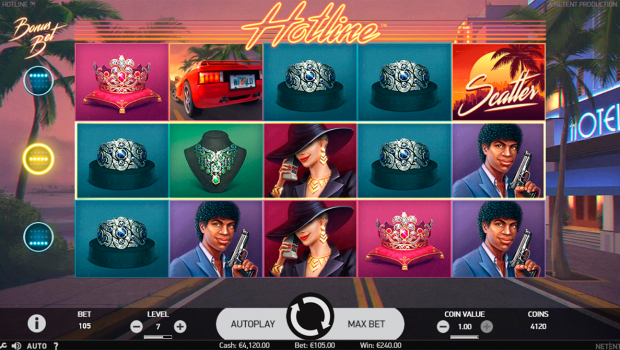
Understanding volatility helps you select a game that aligns with your bankroll and temperament. Low‑volatility slots preserve your balance moving along with frequent small pays, making them perfect for extended sessions with a limited budget. High‑volatility games, by contrast, can consume a balance rapidly during a dry spell, but they provide the opportunity of a big hit that can transform a session around. House of Fun’s medium‑high profile means you can anticipate stretches where the reels feel quiet, punctuated by moments of excitement when the bonus round lands. The RNG does not care your session length; it simply performs the probability distribution. For Australian players who enjoy the thrill of chasing a feature, this volatility level is commonly a perfect fit.
Stake Ranges and Maximum Win: How the RNG Handles Stake Size
The RNG itself has no idea of your stake size. It produces a random outcome that matches a multiple of your total bet. House of Fun allows players to modify their coin size and the number of active paylines, yielding a bet range that usually ranges from a few cents up to a maximum that suits both casual players and those who favor higher stakes. When you change your bet, the RNG keeps to deliver the same random sequence of reel stops; the only thing that differs is the cash value linked to each winning combination. A five‑of‑a‑kind top symbol win awards a fixed number of coins, and that coin count is multiplied by your bet per line to reach the actual payout. The RNG’s impartiality indicates that the probability of landing that combination is the same whether you stake the minimum or the maximum.
The maximum win in House of Fun is displayed as a multiple of your total bet, commonly reaching several thousand times your stake. This cap is not applied by the RNG directly but by the game’s paytable and the limits of the bonus features. The RNG can theoretically produce the top combination on any spin, but the probability is incredibly small. For Australian players, it is good to know to know that the bet size does not change the randomness; the game does not “tighten up” for higher wagers or “loosen” for lower ones. The RNG stays blind to the stake, offering the same fair odds to every player on every spin.
How the RNG Determines the Reels and Paylines
When considering the RNG “deciding” a spin, what this actually means is that the generated number is translated into a specific arrangement of symbols on the screen. House of Fun features a 5‑reel layout with a set number of paylines, generally 25, even though the exact count can be checked on the game’s paytable. The RNG does not pick symbols directly; it picks a virtual stop position for each reel. Each reel strip includes a long sequence of symbols, often dozens of stops, and every stop is designated a range of numbers from the RNG’s output. When you hit spin, the generator provides a number, the software checks criptonoticias.com which stop that number corresponds to, and the reel is positioned accordingly. This all occurs in milliseconds, creating the illusion of spinning reels.
Translating Numbers to Reel Stops
The mapping process is weighted so that lower‑value symbols show up more frequently than high‑value symbols or scatters. This weighting is not deceptive; it is the manner in which the game’s mathematics achieves its designed return to player and volatility. In House of Fun, the haunted‑house symbols—ghosts, candelabras, and creepy portraits—each possess their own probability of landing, and the RNG follows those probabilities over millions of spins. The result is that every possible combination presents a known chance of occurring, and the game operates exactly as its paytable promises. For Australian players, this means that even though you cannot anticipate a single outcome, you can rely on that the long‑term behaviour of the reels matches the published RTP.
Paylines Compared to Ways to Win
House of Fun uses a traditional payline model, where winning combinations must land on specific lines that run from left to right. The RNG decides which symbols appear on each position of the 5×3 grid, and the game then examines those positions against the active paylines. As the RNG selects stops independently for each reel, the chance of hitting a particular payline combination is the product of the individual symbol probabilities. This is why five‑of‑a‑kind top symbol wins are uncommon but worthwhile. If the game used a ways‑to‑win mechanic, the RNG would still control symbol placement, but the evaluation would simply search for matching symbols on adjacent reels regardless of line patterns. The underlying randomness continues to be identical; only the win‑checking logic changes.
How to Experience House of Fun with Assurance in the RNG
Armed with an understanding of the RNG, you can handle House of Fun as an educated player. Start by opening the paytable to check the symbol values, paylines, and bonus rules. Select a bet level that suits your session budget, bearing in mind the medium‑high volatility. Since the RNG functions independently on every spin, there is no trend to chase and no gain to adjusting your bet after a win or loss. The best strategy is to pick how many spins you want to experience and stick to that plan. The game’s mood—creaking doors, flickering candles, and ghostly animations—is crafted to entertain, and understanding that the outcomes are fair lets you to focus on that entertainment.
We consistently recommend playing House of Fun at an online casino that presents its testing certifications transparently. Before you commit real money, sample the game in demo mode if available, so you can see the RNG in action without risk. Focus on how the free spins feature triggers and how the wilds act; this will give you a feel for the volatility. Bear in mind that the RNG does not promise a feature within any specific number of spins; dry spells of a hundred spins or more are typical in a medium‑high volatility game. By embracing the randomness and playing within your means, you transform the RNG from a source of suspicion into the very thing that makes every spin exciting. For Australian pokies fans, that shift in perspective is the real key to enjoying House of Fun responsibly.